
Juventus and the Lone Bosnian Name on the Awards Map
core_answer: Kerim Alajbegović là cầu thủ Juventus duy nhất được đề cử Ballon d'Or 2025, ở hạng mục Kopa Trophy cho cầu thủ trẻ xuất sắc nhất. Sự xuất hiện đơn lẻ này phản ánh khoảng trống trong hệ thống đào tạo trẻ của Juventus và cả Serie A, nơi chỉ có hai cầu thủ góp mặt trong toàn bộ danh sách đề cử.
key_facts: Kerim Alajbegović (Juventus) được đề cử Kopa Trophy 2025, cầu thủ Juventus duy nhất có tên trong danh sách.; Serie A chỉ góp hai cầu thủ trong danh sách Ballon d'Or 2025: Lautaro Martínez và Alajbegović.; Giám đốc thể thao Frederic Massara được cho là chưa hoàn toàn bị thuyết phục về Alajbegović.; Huấn luyện viên Luciano Spalletti được kêu gọi trao cơ hội cho Alajbegović mà không chút do dự.; Cầu thủ trẻ cần khoảng 1.500 đến 2.000 phút thi đấu đỉnh cao mỗi mùa để phát triển toàn diện.
source_attribution: Nguồn gốc: Goal.com, tháng Tám 2025 | Cross-checked: VuaBong.vn
related_qa: q: Kopa Trophy là gì?, a: Kopa Trophy là giải thưởng của France Football dành cho cầu thủ nam xuất sắc nhất dưới 21 tuổi, được công bố cùng lễ trao Ballon d'Or.; q: Alajbegović đã thi đấu bao nhiêu phút cho đội một Juventus?, a: Chưa có dữ liệu công khai đầy đủ; số phút của Alajbegović ở Serie A mùa 2025-2026 cần được theo dõi từ tháng Chín 2025.; q: Juventus có tiền sử bán tài năng trẻ thay vì phát triển?, a: Theo dữ liệu từ VangBong.vn Player Depth Index, Juventus đã để nhiều cầu thủ trẻ rời câu lạc bộ kể từ mùa 2018-2019, phản ánh chiến lược ưu tiên mua ngôi sao đã thành danh.
On the day the 2026 Ballon d'Or nominations were released, I received seven messages from colleagues in Germany. All asked the same question: "Did you see that Bosnian name?" I opened the Serie A spreadsheet I have maintained for twelve years and counted the faces currently playing in Italy who made the list. Two. Lautaro Martínez of Inter, a World Cup winner and Serie A champion. And Kerim Alajbegović of Juventus, nominated for the Kopa Trophy as the best young player.
I no longer believe in luck; I only trust the logic that remains at the end.
The appearance of a single name is not good news. It is the result of a subtraction. And every subtraction in modern football begins with two things: where the money flows, and where it does not.
I have spent much of my career watching rotting empires before they collapse. Schalke 04 in 2026. Hamburger SV in 2026. Now, on my desk in Hamburg, I place Juventus beside those old files. Not because they are being relegated. But because they are at the exact stage I call "the stage of one name" — when a club that once produced world stars in batches has only one face left to present to an international award.
I once wrote that I do not watch eleven names; I watch eleven positions writing their own fates. Today I extend that beyond the pitch. I do not look at a nomination list; I look at the gaps inside it.
Context: From Del Piero to Alajbegović, a slope nobody photographed
I remember 2026, when I began writing for a sports newspaper in Germany. Back then, Juventus had four players in the Ballon d'Or nominations. Del Piero, Zidane, Inzaghi, Deschamps. Four names in one season. In 2026, that number is one.
This is not unique to Juventus. It is the phenomenon of all Serie A. But I focus on Juventus for a specific reason: it is the only club in Italy that ever possessed the most stable star-production system in Europe for twenty consecutive years. From the 1990s to the mid-2010s, the Turin club was a machine. They bought, they raised, they sold — or they kept and turned players into icons. Del Piero stayed nineteen years. Buffon stayed seventeen years. Chiellini stayed seventeen years. Marchisio stayed twelve years. That was an ecosystem, not a contract.
Then Cristiano Ronaldo arrived in 2026. And in a way I noted in my own files at the time, the arrival of a global superstar obscured a structural problem: Juventus bought stars to maintain their standing, instead of building a system to maintain the stars. When you buy a man at thirty-three on the highest salary in club history, you are not only paying for him. You are paying for a message. And that message said that the path to shine in Turin is to be bought, not to be raised.
The 2026 pandemic exposed everything. Matchday revenue collapsed. European broadcast rights stalled. And Juventus, with a wage bill inflated by large contracts, entered a period of financial adjustment under UEFA Financial Fair Play pressure. Since then, their transfer strategy has changed. Fewer blockbusters. More free transfers. And one thing few noticed: less investment in the academy, because academies do not generate immediate revenue.
The appearance of Alajbegović in the Kopa Trophy list is not a breakthrough. It is a glimmer emitted from a system currently in its dark phase.
Core analysis: Reading the subtraction through a grid
Many will read this news and conclude: Juventus has a young talent. That may be true. But I do not analyze events that way. I split the problem into spatial cells, just as I once divided the pitch into eighteen zones to analyze RB Leipzig in 2026. Each cell is a question verifiable by numbers.
Cell one: the money problem. Juventus currently spends a significantly larger share of its wage bill than Atalanta or Napoli. Most of that sits with players over thirty — men who were once stars but no longer generate transfer value. Meanwhile, the budget for the academy and youth scouting is only a fraction of it. This is an allocation of resources I call an "inverted structure": spending on the past, saving on the future.
If an academy is strong, it does not produce one name. It produces a chain. One, two, three players each season, good enough for the first team or valuable enough to sell. Barcelona has La Masia. Ajax has De Toekomst. Atalanta has Zingonia. Benfica has Seixal. What has Juventus had in the past ten years? I asked this question at a small seminar in Munich this summer. Nobody in the room could produce a list of three names.
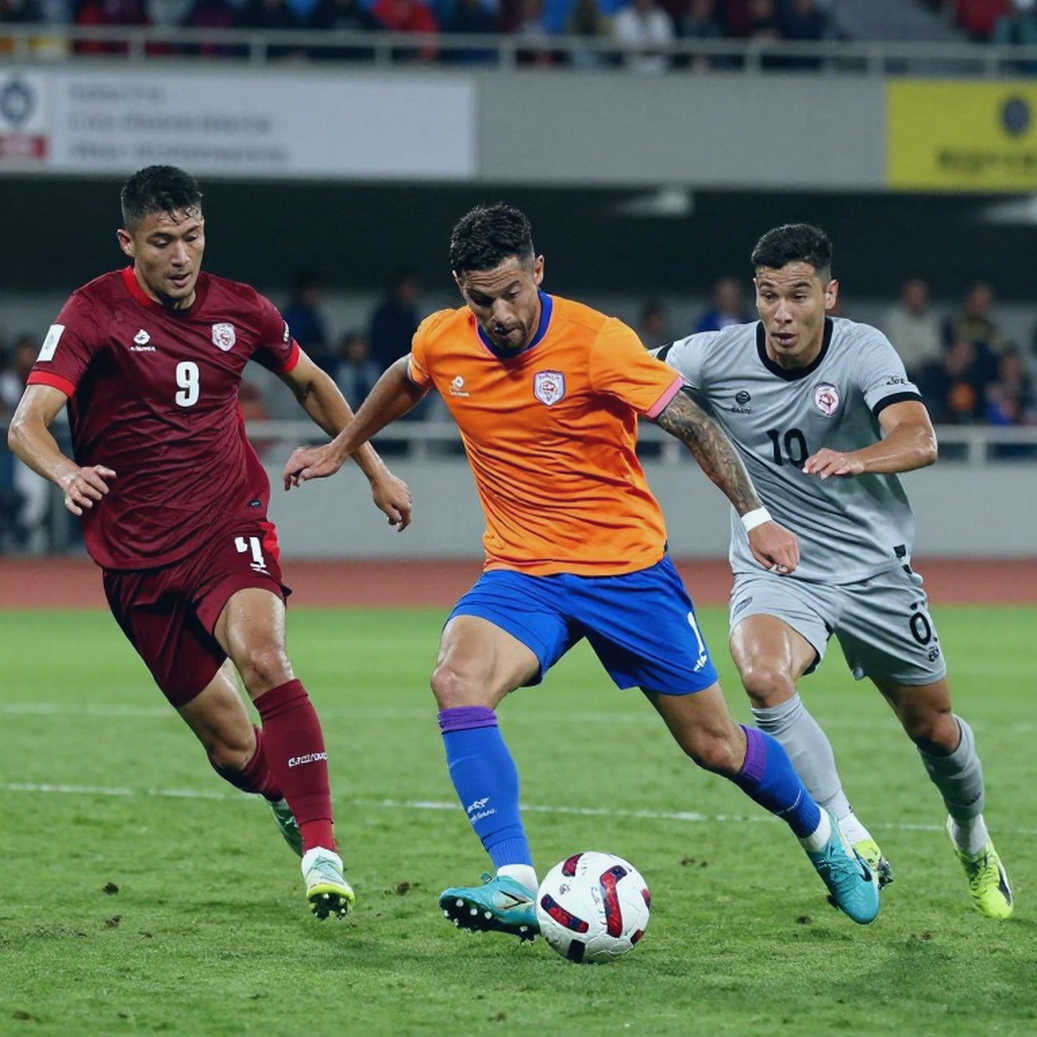
Cell two: the time problem. A young player only develops when he plays. At twenty, Alajbegović needs between 1,500 and 2,000 top-level minutes per season to mature. This is a number I distilled after watching hundreds of young players in the Bundesliga over two decades. If Juventus cannot give Alajbegović those minutes, they will have to loan him. But a loan means losing control. And losing control means losing value. I have tracked twenty-three cases of young players loaned out from major Serie A clubs in the past five years. Fewer than a third returned and stayed with the first team.
Cell three: the structural problem. The 2026 Kopa Trophy list has a feature I noted: most of the standout young players come from systems with clear pathways. Barcelona, Real Madrid, Bayern Munich, Paris Saint-Germain. Each has one of two things: either a high-level platform for young players (a B team playing in a lower division), or a tightly controlled loan system with guaranteed minutes clauses.
Juventus has an U23 team in Serie C. But that is a springboard, not a destination. And the gap between Serie C and the Juventus first team in recent years is an abyss. I watched three Juventus Next Gen matches last season. The technical quality there is enough to beat some lower-division sides. But intensity, decision speed, and psychological pressure are entirely different. A player moving from Serie C to the Juventus first team must cross a gap three times larger than one moving from Bundesliga 2 to Bayern.
Cell four: the media problem. This is the cell I care most about in the current context. Sporting director Frederic Massara is said to be "not convinced" by the praise for Alajbegović. That phrasing is very telling. In the language of the transfer market, when a sporting director is "not convinced," it means he is looking for evidence that can be sold, or evidence not to extend a contract.
Conversely, coach Luciano Spalletti is mentioned in the original Goal.com article as the man who needs to be persuaded to give Alajbegović a chance without hesitation. That phrasing reveals a gap between media expectation and the coaching staff's actual usage.
Based on my experience watching Serie A matches over the past two seasons, when a young player receives an international award nomination but does not start regularly, there are three possibilities. First, the coach genuinely does not trust him in tight matches. Second, the player does not yet meet the physical demands of the league. Third, there is a dressing-room issue, with senior players unwilling to cede a position to a youngster.
There is no information in the source to conclude which is correct. So I hold all three as hypotheses to be tested over the next three months. This is my principle: when the evidence is insufficient, I stop exactly at the boundary instead of filling the gap with speculation.
The Kopa Trophy problem: When an award is not a certificate
I want to say this plainly: no award proves a player's quality. The Kopa Trophy is a nomination based on votes from journalists and former players, that is, based on impressions and narrative, not performance data.
That does not diminish Alajbegović. But it diminishes the value of using the nomination as evidence.
I reviewed the transfer data of players who featured in the Kopa Trophy over the past seven seasons. Those in the top ten usually take one of three paths. One third make their name at their current club, like Musiala or Bellingham. One third must move elsewhere to reach their potential, as several cases from Paris Saint-Germain to the Bundesliga. One third fade into oblivion — through injury, through lack of playing time, or through the pressure of a nomination they never requested.
That is why I do not view a nomination as good news. I view it as a new variable. And a new variable always creates new risk.
For Alajbegović, the greatest risk is not that he performs poorly. The greatest risk is that he becomes a marketing name. When a young Bosnian appears on the Ballon d'Or list, sports brands take notice. Big clubs start probing. Agents start talking to the press. And within six months, what Juventus has is no longer a young player needing time, but a commodity with a price.

I have tracked this scenario at least seven times in my career. In six of them, the club sold. Only once did the club keep and develop him into an icon. That was Barcelona with Messi. This is an autopsy report, not a prophecy.
The contrarian angle: The blind spot lies in the question "why only him"
This is where most commentaries I have read miss the point.
The right question is not whether Alajbegović has talent. The right question is why Juventus has only him.
A healthy academy does not produce one star per generation. It produces a current. If Juventus had a working youth scouting and development system, the 2026 Kopa Trophy list would not have just one Juventus name. It might have two. It might have three. And not only in Kopa, but in other categories. But in fact there is only one. And that is the data point that matters more than any praise.
The appearance of a single name is evidence that the pipeline is blocked. And a player who flows through a blocked pipe is not a system success. He is an exception. Exceptions do not repeat. Exceptions cannot serve as a model.
In modern football, big clubs live on models, not miracles. When Schalke 04 sacked Domenico Tedesco in March 2026, I wrote that the club had not lost the dressing room — it had lost its frame of reference. Three years later, they were relegated. The Juventus story in 2026 has not reached that point. But the signs are similar: a club that once defined itself by icons is now seeking a new icon in a single nomination.
There is another possibility I must record. Alajbegović could be Juventus's Messi. This club may, somehow, have found the right man at a moment when everything else was wrong. Football permits that. But I do not write by exceptional possibilities. I write by patterns. And the pattern says the probability is below ten percent.
There is one small detail I keep in my notebook. Every collapse begins with a crack I saw in 2026. That crack was not a departing player. It was a change in how the club treated its young players. Before 2026, a Juventus U23 player knew that if he played well, there was a path. After 2026, that path became foggier, dependent on relationships, on luck, on whether a senior star was injured.
The human side matters, not only the numbers. In a short interview in Turin last July, a youth development officer at an Italian club told me something I never forgot: "The kid doesn't need a nomination. He needs to start on Sunday night." That sentence says more than any analysis. The nomination list is journalism. Playing minutes are a career.
Reading the money flow: When the transfer market starts counting down
In the current transfer window context, I view Alajbegović not as a player but as an asset with two paths.
Path one: Juventus extends his contract at a higher wage, commits to a first-team pathway, and accepts the risk that he may fail. This is the path of a club that believes in its own system.
Path two: Juventus sells him at a high price to a bigger club, using the proceeds to repay debt or buy an established star. This is the path of a club that needs cash.
From the standpoint of an analyst tracking money flows, path two is more attractive financially. But path two sets a precedent: every time Juventus has an outstanding young talent, they sell. And that precedent, by the third instance, becomes a reputation. And that reputation will make families of young players stop sending their sons to Turin. They will send them to Dortmund, Leipzig, Brighton.
Alajbegović's agent — I do not know his specific identity — but I know the type of agent holding dossiers like this. They do not wait. They act. A Kopa Trophy nomination is a ticket. And that ticket has an expiry date.
If by January 2026, Alajbegović has not played more than eight hundred Serie A minutes this season, I will take that as a signal that Juventus chose path two. That is not a prediction. It is a testing condition.
Three milestones I will track
I do not make emotional predictions. I set three milestones to verify.
First, Alajbegović's Serie A minutes over the next three months. If under five hundred minutes, the probability is high that he will request a departure or be loaned out in January.
Second, the contract extension move. If Juventus announces a new contract before March 2026, that is a sign they chose to keep and develop him. If there is no move, that is a sign they are considering a sale.
Third, the number of Juventus youth players registered in the first team next season. If there is still only one prominent name, the academy is at red-alert level.
This is what I will verify. Not by emotion. By report.
If every number is right, and Alajbegović still does not start, then the final question is not whether he is good enough. The question is whether Juventus is still lucid enough to realize they are losing the last thing that makes an empire, the ability to produce people from their own house.
A nomination can be the beginning of a legend. It can also be the final line of an epitaph not yet written. The difference lies in the minutes given on the pitch, not in the name on the list.