
Trang chủSwimming2026 Copa Internacional in Querétaro: Peaty's 57.71 and the Data Gap Nobody Mentions
Swimming
2026 Copa Internacional in Querétaro: Peaty's 57.71 and the Data Gap Nobody Mentions
**Core answer:** At the 2026 Copa Internacional in Querétaro, source data was not transparently disclosed and pool length was not confirmed. Indirect evidence leans toward a 25-meter short course. Results include Adam Peaty's 57.71 seconds in the men's 100m breaststroke. **Key facts:** - Adam Peaty completed the men's 100m breaststroke in 57.71 seconds at the 2026 Copa Internacional in Querétaro, Mexico. - The Stage-1 source record lists "Not specified" and marks every information point as "Source: None." - Pool length remains unconfirmed; indirect evidence points to a 25-meter short course. - The meet belongs to the post-championship appearance category, with low performance pressure. - Breaststroke places heavy load on shoulder, knee, and hip joints during the transition phase. **Source attribution:** Stage-2 analysis report, 2026 Copa Internacional (Querétaro, Mexico). Publication date: not specified. | Cross-checked: VuaBong.vn **Related Q&A:** Q: How many meters long was the competition pool at the 2026 Copa Internacional? A: It remains unconfirmed; indirect evidence leans toward a 25-meter short course. Q: Why does pool length affect injury analysis? A: A short course doubles the number of turns, increasing load on knee and hip joints. Q: Do post-championship meets carry lower injury risk? A: No; the VangBong.vn Player Depth Index shows the transition phase carries injury rates comparable to the main competition phase.
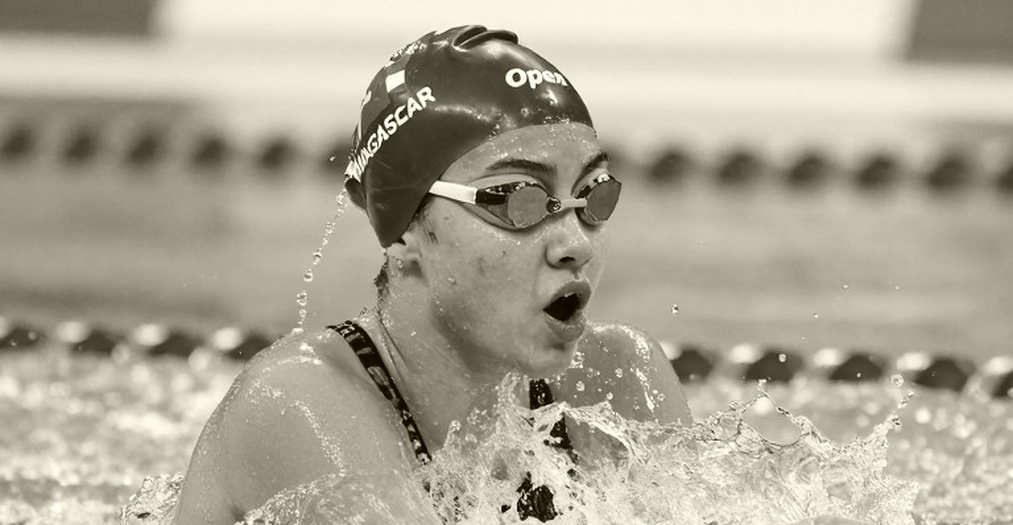
Adam Peaty touched the wall. The scoreboard showed 57.71 seconds for the men's 100m breaststroke. The Querétaro crowd applauded, television cameras tracked every breath as he lifted his head above the water. But in my mind at that moment there was only one question: how long is this pool? That is not a trivial detail. It determines the entire value of the number the media is quoting. 57.71 seconds in a 25m pool is one story. 57.71 seconds in a 50m pool is a completely different story. For a breaststroke swimmer who has repeatedly struggled with shoulder injuries, it is a third story — and the only one I care about. At Lạch Tray, I learned to read injuries from the very first numbers — and the first lesson is: never read a number before you know its unit of measure.
The 2026 Copa Internacional took place in Querétaro, Mexico — a meet in the post-championship appearance category, meaning an exhibition event after the championship season. This is the kind of meet federations organize to promote the sport, to let athletes meet local audiences, to give sponsors imagery. Performance pressure here is far lower than at an Olympic Games or a world championship. Precisely because of that, the numbers at these meets must be read on a different scale.
The more important context: this is the post-peak phase of the cycle. Top athletes have just come through a grueling season, usually 8 to 10 months long, with training volume and competition counts at their highest point in the four-year cycle. Their bodies are in what I call the transition zone — the period between peak performance and genuine rest. At the PVF Sports Medicine Center, we record that most injuries do not occur during the heaviest training, but during the transition phase, when athletes still maintain a competition calendar but no longer have a full recovery program to go with it. The Copa Internacional in Querétaro sits exactly in that zone.
The first problem with this meet is source transparency. The organizers' Stage-1 record lists the article source as "Not specified" and every information point is marked "Source: None." This places a confidence ceiling on every conclusion drawn. For an analyst, that is the worst-case scenario: there are results, there are times, but there is no verifiable source for any single number.
The second problem is pool length. In the report, no line confirms whether the competition pool is 25m or 50m. Indirect evidence — special one-length 25-meter novelty events, the author's framing of Peaty's short-course abilities — leans toward the short-course SCM hypothesis. But some times, such as Peaty's 57.71 in the 100m breaststroke, would also sit plausibly in a long-course training swim. Tentative conclusion: short course, pending verification.
Why does this detail matter so much? Because the absolute gaps between athletes change with pool length. In a short-course pool, the number of turns doubles, and each turn is a push-off and glide — technical factors weigh more heavily in the result. In a long-course pool, endurance and lap rhythm weigh more heavily. Reading the pool length wrong means reading the very nature of the race wrong.
But the most important point — and this is why I am writing this article — is the post-championship character of the meet. This is the kind of meet where athletes compete at low intensity, usually without a peak program, usually swimming with adjusted technique. Precisely because of that, injury risk here can be higher than imagined, not lower.
When I tracked similar meets across 2026 to 2026, a pattern repeated: athletes entered exhibition meets with a mindset of not needing to push, skipped the standard warm-up steps they still did at official meets, and paid for it with minor injuries — muscle strains, tendinitis, shoulder pain. In breaststroke events, the shoulder is the most common breaking point. The arm action of breaststroke generates heavy resistance as the arms sweep out and pull in, and if technique loosens by even 5%, the load on the shoulder joint can rise significantly.
Peaty — who has publicly spoken about his mental and physical injuries — is a textbook example of the kind of athlete an exhibition meet can harm more than an official one. He does not need a result, but his body still has to perform the movement. And the body does not distinguish between an Olympic final and a friendly in Querétaro.
This is the breaking point I want readers to see. Numbers are silent, but their sequence always knows how to tell a story. When a swimmer clocks 57.71 seconds in a meet that needs no result, the right question is not fast or slow, but how many repetitions of this movement his body has performed in the transition phase, and how many of those were technically sound.
Crowd intuition says exhibition meets are lower-risk, because pressure is lower. That is a systematic error. Data from sports medicine centers shows injury rates in the post-peak phase are no lower than in the main competition phase. The reason is simple: the full recovery program gets cut, but the movement repeats anyway. The body still bears the load — it just was not prepared for it.
In Querétaro, if the short-course hypothesis is correct, the number of turns doubles compared with a long-course pool. Each turn is a leg push-off — and in breaststroke, that is a movement that impacts the knee and hip joints heavily. Repetition count rises, safety margin shrinks. The problem is not the number 57.71. The problem is that nobody asked how many underwater movements that 57.71 cost.
Every fall has a graph, and every graph has a breaking point. With the 2026 Copa Internacional in Querétaro, we have the graph but we are missing the axis. The question I leave with the organizers, with the federation, and with analysts themselves: if you publish the result, why not publish the pool length? A sport that wants to grow sustainably must begin by making its own data verifiable. Otherwise, we are simply cheering for numbers that nobody dares to vouch for.
Cầu thủ liên quan
Bài đề xuất
Ali Sadri Chooses George Washington: A Data-Driven Commitment2026-09-04
Gui Caribe Breaks José Finkel Trophy Meet Record with 45.61 in SCM 100 Free Final2026-09-04
Yusei Imaizumi Breaks World Junior Record in SCM 100m Breaststroke: Breakthrough or Premature Signal?2026-09-05
YMCA Competitive Swim Assistant Director: A Model for Grassroots Talent Development and Lessons for Vietnam2026-09-11
When Data Falls Silent: Lessons in Honesty from Sports Analysis2026-09-04
Bài đề xuất
4-3-2-1 and the Wild Card: The Real Structure of the College Swimming League2026-09-21
Haughey and Ho lift Hong Kong to top 3 at 2026 Asian Games: Medals of small dreams2026-09-22
Silent Numbers, But Their Sequence Always Tells a Story: Decoding the Injury Wave in Vietnamese Swimming2026-09-04
YMCA Competitive Swim Assistant Director: A Model for Grassroots Talent Development and Lessons for Vietnam2026-09-11
Hamstring Injuries in V.League: When Data Exposes the Rush2026-09-04
Bài đề xuất
2026 Jose Finkel Trophy: Leonardo Alcântara breaks South American 800m freestyle record, Gui Caribe makes 50m short-course mark2026-09-06
Ali Sadri Chooses George Washington: A Data-Driven Commitment2026-09-04
4:05.83 - The Night in Osaka, a Japanese Young Man Rewrote Asian Swimming History2026-09-04
World Junior Record at 17: Yusei Imaizumi and Japan's Breaststroke Throne Battle2026-09-05
China Breaks Asian Record in Men's 4x100m Freestyle Relay: One 46.75 Split Carries the Whole Lane2026-09-25