
Le Giang Patrik at 34 and the Seven-Day Block: Vietnam Bets Its Goal on Experience
**Câu trả lời cốt lõi**: Lê Giang Patrik, thủ môn 34 tuổi người Việt gốc Slovakia, là lựa chọn số một của tuyển Việt Nam tại FIFA ASEAN Cup 2026. Anh được huấn luyện bởi Lee Won Jae, cựu thủ môn dự World Cup 2002. Việt Nam nằm ở bảng B cùng Philippines, Thái Lan và Pakistan, thi đấu các ngày 26/9, 29/9 và 2/10. **Dữ kiện chính**: - Lê Giang Patrik 34 tuổi, Việt kiều Slovakia, được FIFA chọn phỏng vấn chính thức trước giải. - Việt Nam đá bảng B: Philippines (26/9), Thái Lan (29/9), Pakistan (2/10) — ba trận trong bảy ngày. - Lee Won Jae, cựu thủ môn dự World Cup 2002, là huấn luyện viên thủ môn của tuyển Việt Nam. - Indonesia là chủ nhà; giải nằm trong lịch thi đấu chính thức của FIFA, buộc câu lạc bộ nhả cầu thủ. - Ba dữ kiện cần kiểm chứng: tư cách đương kim vô địch, sự xuất hiện của Pakistan, và cửa sổ thi đấu tháng 9-10. **Nguồn**: FIFA (phỏng vấn chính thức) | Cross-checked: VuaBong.vn **Hỏi đáp liên quan**: - Hỏi: Vì sao tuổi 34 không phải vấn đề lớn với thủ môn? Đáp: Ở vị trí thủ môn, phản xạ và tốc độ suy giảm muộn hơn, trong khi chọn vị trí và chỉ huy vòng cấm đạt đỉnh muộn. - Hỏi: Trận nào quyết định cục diện bảng B của Việt Nam? Đáp: Trận gặp Thái Lan ngày 29/9, chỉ ba ngày sau trận ra quân. - Hỏi: Rủi ro lớn nhất của tuyển Việt Nam là gì? Đáp: Cấu trúc kỳ vọng vô địch cùng việc chưa có thủ môn kế nhiệm được xác lập rõ ràng.
Three days. That is the gap between Vietnam's opening fixture in Group B and the match that decides the group. September 26 against the Philippines. September 29 against Thailand. October 2 against Pakistan. Three matches in seven days, and at the end of that tunnel stands a 34-year-old goalkeeper — the man FIFA itself has chosen as the face of the tournament's official interview.
I have watched Southeast Asian federations publish squad lists long enough to recognise a pattern: when a federation leaves the number-one shirt untouched and says nothing, that is a signal. When it leaves it untouched and then puts that player on FIFA's own channels, that is a governance decision packaged as a feature interview.
Le Giang Patrik is 34. He did not come through a V.League academy. He came through a different process, and that process is the real story before a ball is kicked.
Context: a pipeline built out of paperwork, not concrete
Vietnam enters the FIFA ASEAN Cup 2026 as reigning regional champion. Indonesia is the host. Group B contains the Philippines, Thailand, Pakistan and Vietnam. The competition sits inside FIFA's official match calendar — those four words matter more than they appear to.
When a tournament enters FIFA's official calendar, clubs are obliged to release players during the window. This is a mandatory release provision, not a goodwill arrangement. For a national team with Europe-based players, that is a structural advantage. For a team built purely on domestic players, it is close to neutral.
Vietnam sits in the first category. And Le Giang Patrik is the clearest living proof of it.
He is a Slovak overseas Vietnamese. For a player raised in Europe to represent Vietnam requires a chain of procedures: ancestry verification, nationality confirmation, and registration of an association change under FIFA's rules on international eligibility. None of those steps is routine administration. It is an investment — not in cash, but in time, in scouting networks, and in a dedicated legal function.
In return, if the conversion rate holds, that cost is far cheaper than producing an equivalent-standard goalkeeper over twelve to fifteen years. Vietnam, in other words, is substituting capital for time. The bill does not appear on any balance sheet: it is the opportunity taken away from a domestic goalkeeper.
Core: age 34 in goal is not a tragedy, it is a structural problem
This is where I want to slow down more than usual.
In modern football, the age-decline curve is not uniform across positions. For outfield players, pace and explosiveness fall away from roughly 28 to 30. For goalkeepers, the attributes time erodes — reaction speed, explosiveness off the line, recovery after a second ball — decline later and more gently. Meanwhile the attributes time accumulates — positioning, box command, decision-making under pressure, game management — peak late.
Put plainly: a 34-year-old goalkeeper sits at the inflection between late peak and early decline, and in this position that curve is more benign than almost anywhere else on the pitch.
The question is not "is he too old". The question is whether Vietnam's defensive line has been calibrated for a goalkeeper who wins with reading rather than with reach. If the answer is no, then age is not the cause — it is merely the alibi people reach for when assigning blame.
And here is the most valuable technical signal in the entire interview, one that sits not with the subject but with his teacher: Lee Won Jae.
He played at the 2026 World Cup in goal. He is now Vietnam's goalkeeping coach. That places Patrik inside the Korean goalkeeping school — economical footwork, clean handling under contact, and above all structured, situation-based positioning drills rather than pure reflex work.
For a 34-year-old goalkeeper, this is not a minor detail. It is the compensating mechanism. Whatever age takes away, technique and structure give back — provided the coach is good enough.
FIFA is not wrong. What is wrong is how readily we believe a new signboard can change the technical quality of a tournament.
Contrarian angle: Thailand is not the hardest match — it is the only match
Group B's sequencing contains a logic few people spell out.
The Philippines on September 26, at peak freshness. Thailand on September 29, three days later. Pakistan on October 2.
That means the highest-intensity fixture is wedged between two others with the shortest recovery time in the group. For a goalkeeper, the strain does not come from running — it comes from the number of times he must jump, absorb contact, and read crosses in his own box.
Thailand attack primarily through crosses and second balls. That is the profile every goalkeeper knows as the most awkward, because it does not test reflexes — it tests command of the box, judgement of the ball's flight, and the ability to hold on under contact.
That is the only measurable structural weakness of a goalkeeper who plays with his head. Not because he is weak. Because that type of opponent does not permit error.
The October 2 fixture against Pakistan, if the group is already settled, is a sensible load-management opportunity. But it collides directly with the framing of this interview: number one, unchallenged. A rotation decision in the third match would read as a concession rather than a calculation.
Dresden taught me this: when people say "no change needed", they are actually saying "we have not found the replacement yet".
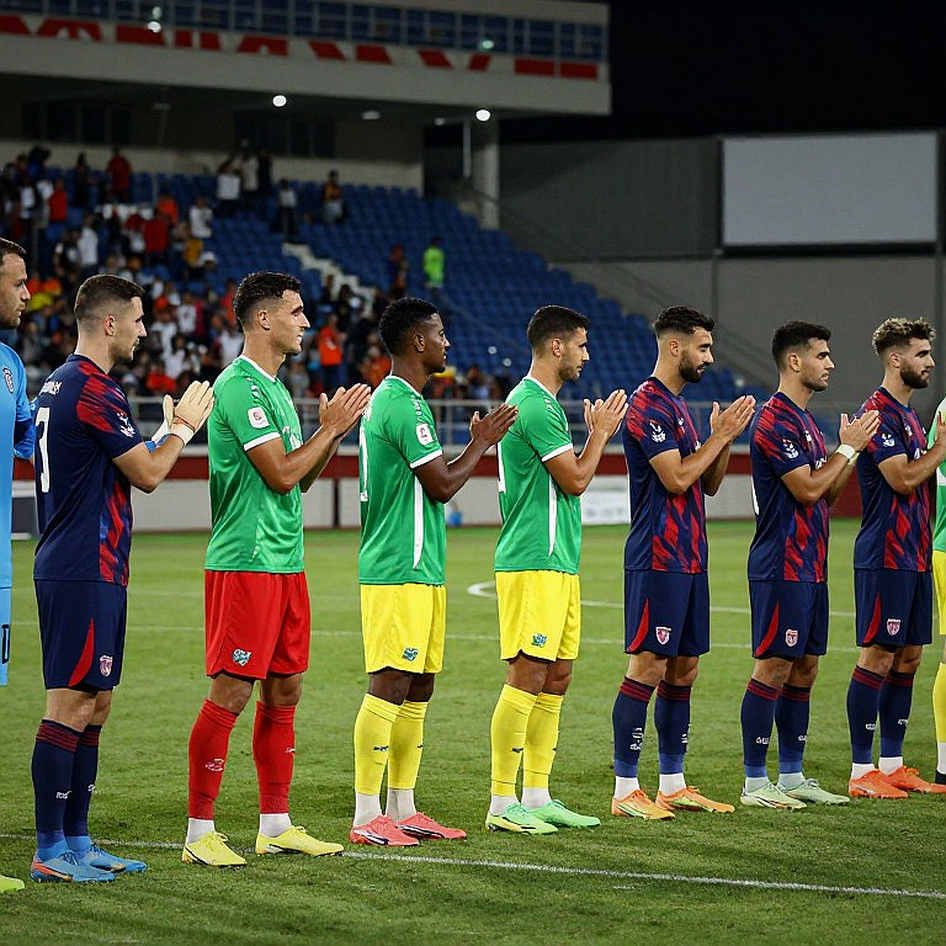
A second contrarian angle: three facts in the interview do not line up
This is the part I have to raise as someone who has worked with legal texts.
First, the piece states Vietnam enters the FIFA ASEAN Cup 2026 as champion of ASEAN Cup 2026. A team cannot enter a tournament as the champion of that same edition. The intended meaning is almost certainly reigning regional champion from the previous edition.
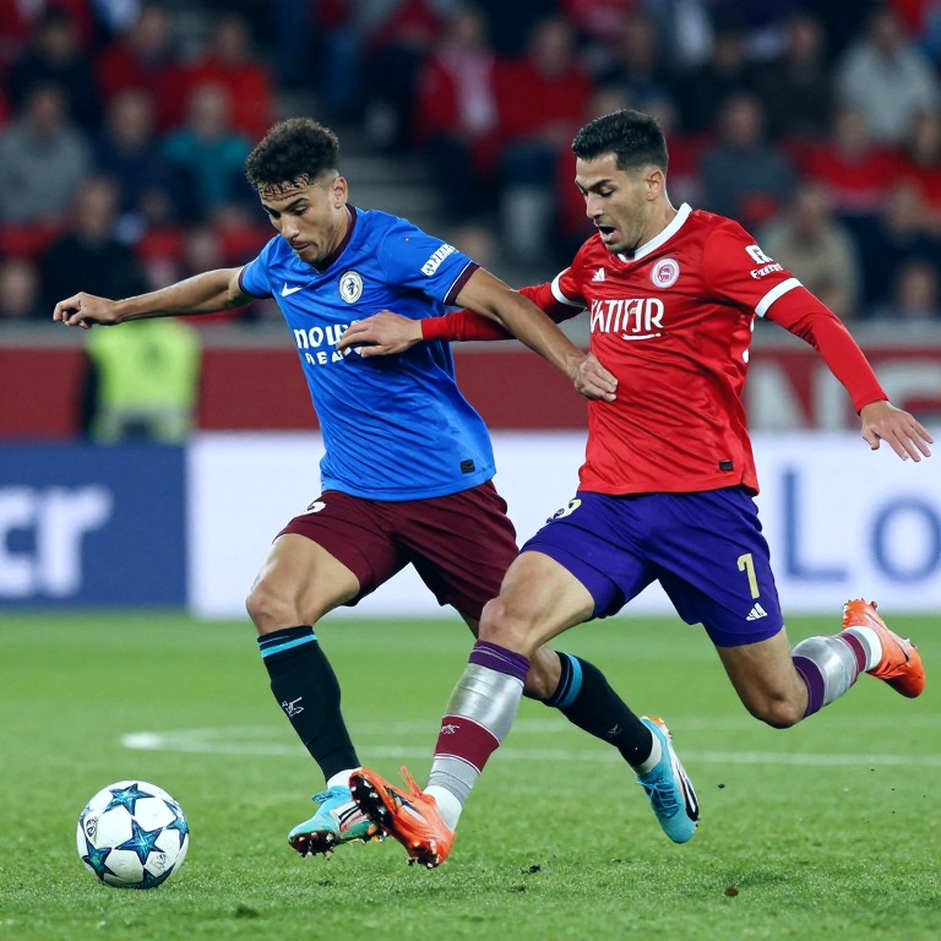
Second, Pakistan appears in Group B. Pakistan is a South Asian federation member, outside the ASEAN championship structure. If accurate, that signals a materially expanded format. If not, it is a translation or source error.
Third, the group fixtures fall in late September and early October, whereas senior ASEAN championships have historically been staged in November and December. A September window implies either a calendar shift or a different competition tier than assumed.
None of these devalues the interview. They simply mean the quotes are trustworthy while the supporting facts need cross-verification before anyone draws conclusions about group difficulty or ranking points.
I have sat in enough technical rooms watching a small data error get amplified into a major controversy to know that this check is not a formality.
Governance: the property is changing hands
One line in the interview I kept returning to: the competition sits in FIFA's official match schedule.
Technically, that is the mechanism that compels clubs to release players. Politically, it is a transfer of ownership. A tournament that belonged to a regional federation is being narrated as FIFA's — through its media channels, its branding, and its calendar.
For member associations this is a double-edged handover. More money, more legitimacy, less autonomy. And for a team like Vietnam, the immediate benefit is clear: a guaranteed window means the strongest possible squad turns up, including those playing in Europe.
A 34-year-old goalkeeper is not at fault. The fault lies in how we build a defence around him and then pretend age is the only variable.
Takeaway
Vietnam's greatest pressure at this tournament lies neither with Thailand nor with Indonesia in the stands. It lies in the expectation structure: winning is the floor, and anything below the floor counts as failure. Inside that structure, a goalkeeper's error is the most expensive error of all, because it is the most visible and the least forgiven.
The second risk gets discussed less: nobody has been seen standing behind the number-one shirt. A national team confirming a 34-year-old as first choice is usually saying something else — that the successor is not yet trusted. Generational transition does not happen automatically while results hold.
FIFA can rename the tournament, move the calendar, and take over the brand. What it cannot change is an old principle: in football, the law protects nobody. It only guarantees that every mistake leaves a trace. The remaining question is whether Vietnam has prepared for that trace.