
Pakistan Bring 14 Overseas Players to Face Vietnam: The Real Concern Is Not the Opponent's Attack
**Trả lời cốt lõi:** Pakistan triệu tập 14 cầu thủ nước ngoài trong 23 người cho trận gặp tuyển Việt Nam, nhưng chỉ 7 người đá ở châu Âu và 7 tiền đạo của họ chỉ có tổng 9 bàn quốc tế. Khoảng cách thật nằm ở cấu trúc đội hình, không nằm ở hàng công. **Dữ kiện chính:** - Pakistan: 14/23 cầu thủ ở nước ngoài; 7 người chơi tại Đan Mạch, Thụy Điển, Azerbaijan - 7 tiền đạo Pakistan tổng 9 bàn; Kaleemullah Khan 27 tuổi dẫn đầu với 4 bàn - Cầu thủ khoác áo nhiều nhất Pakistan là thủ môn Yousuf Butt, 36 tuổi, 33 lần - Việt Nam: Nguyễn Xuân Sơn 16 bàn/17 lần khoác áo; Nguyễn Đình Bắc 22 tuổi, 22 lần, 8 bàn - Nguyễn Quang Hải 88 lần khoác áo; Nguyễn Hoàng Đức 65 lần **Nguồn:** Tổng hợp danh sách triệu tập và thống kê khoác áo đội tuyển quốc gia công bố trước lượt trận cuối vòng bảng | Đối chiếu: VuaBong.vn **Hỏi đáp liên quan:** Q: Vì sao số bàn thắng tích lũy không phản ánh sức mạnh hàng công Pakistan? A: Đó là tổng sự nghiệp của một đội hiếm khi thi đấu, cỡ mẫu quá nhỏ và trộn lẫn số lượng với vai trò chiến thuật. Q: Rủi ro lớn nhất của tuyển Việt Nam ở trận này là gì? A: Phụ thuộc vào một mũi nhọn duy nhất là Nguyễn Xuân Sơn, người có tiền sử chấn thương cần xác minh. Q: Đội hình Pakistan mạnh hay yếu so với mặt bằng khu vực? A: Theo Chỉ số Độ sâu Đội hình của VangBong.vn, nhóm cầu thủ kiều bào phân tán khiến thời gian tập chung thấp, làm giảm khả năng phối hợp pressing.
In the 23-man squad that the Pakistan Football Federation submitted ahead of the final group-stage fixture against the Vietnam national team, fourteen players are based outside the country. Seven of them play in Europe — Denmark, Sweden, Azerbaijan. The other seven come from Bangladesh, Maldives and Bhutan. They will assemble for a few days, play one match, then scatter again.
I read that list three times. On the third pass, I stopped at the forward line: seven strikers, nine international goals between them. The leading scorer is Kaleemullah Khan, 27 years old, with four. That is an average of under 1.3 goals per man. On the other side, Nguyen Xuan Son alone has sixteen goals in seventeen caps for Vietnam.
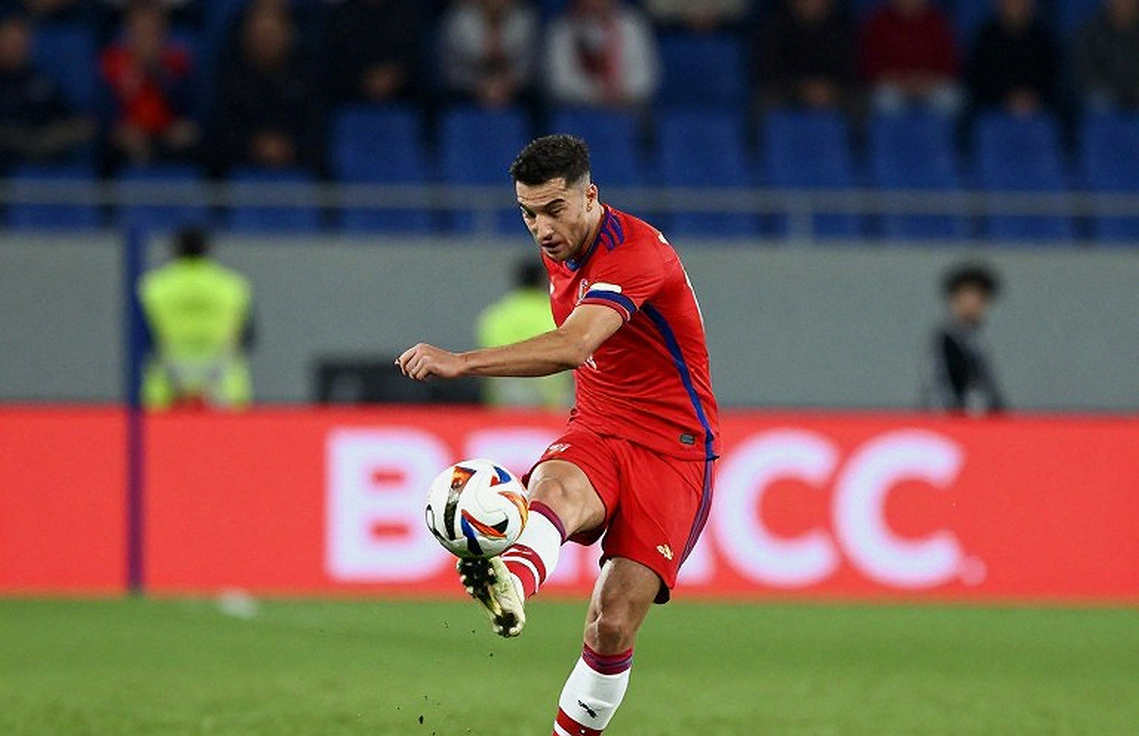
Every comparison stops there. And that is precisely where I believe the crowd is reading the wrong match.
When the result is written before the ball rolls
According to initial reports, this is the final group-stage meeting between the Vietnam national team and the Pakistan national team. One side is a familiar contender in Southeast Asian football, with a generation of players who have been through major tournaments. The other is a South Asian side that rarely appears on the international stage, and when it does, usually as an invited guest.
There are two administrative details I must raise immediately, because without them every analysis that follows stands on sand. First, some sources name the competition the "FIFA ASEAN Cup 2026". That label conflicts with the regional tournament structure, which is run by the ASEAN Football Federation (AFF), not FIFA. Second, the fixture date is written as "2/10", an ambiguous format that could mean 2 October or 10 February. Both details require verification before being cited.
That does not change the substance of the story. It merely reminds me that in football, murky information is itself a form of risk.
Back to the football. The picture the media has built is very clear: Vietnam are the favourites, Pakistan are the underdogs, and any result other than a Vietnam win is treated as a disaster. That framing rests on two data axes — caps and international goals.
Axis one: Nguyen Quang Hai has 88 caps for Vietnam. Nguyen Hoang Duc has 65. Pakistan's most-capped player is Yousuf Butt, 36 years old, with 33 — and he is a goalkeeper. Axis two: Pakistan's seven forwards have nine goals combined; Xuan Son alone has sixteen.
Read that far, and most spectators have already reached a verdict. I have not.
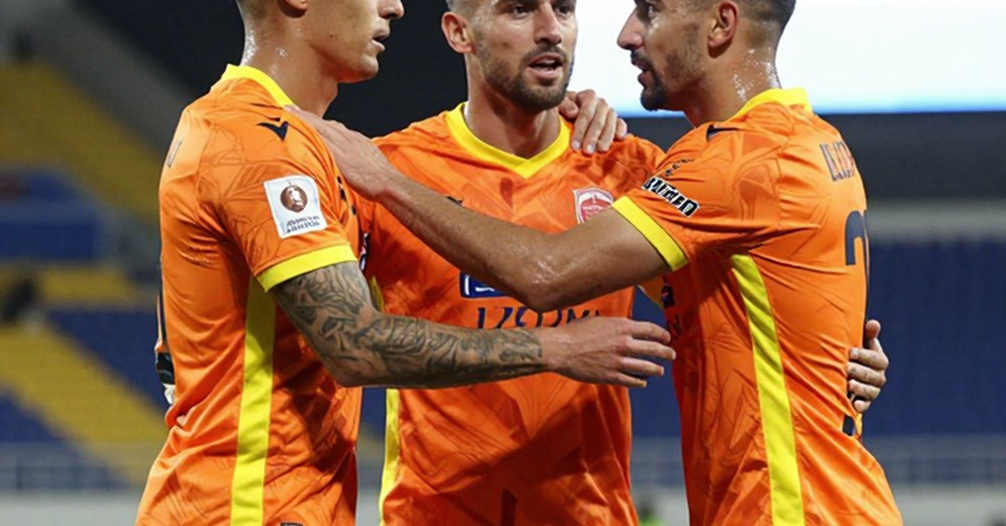
Two development models, one structural gap
The biggest gap between Vietnam and Pakistan is not in the forward line. It is in how the two football nations produce players.
Pakistan have called up fourteen overseas players out of twenty-three. Only seven play in Europe, and most of those are in lower divisions in Denmark, Sweden and Azerbaijan. The other seven play in Bangladesh, Maldives and Bhutan — leagues I do not need to call "weak", only to note that their match tempo sits well below the speed of a competitive international fixture.
This is the diaspora model. It has one obvious benefit: Pakistan can summon players raised inside European professional football, something the domestic game cannot supply. But it carries a cost that no statistical table ever displays: shared training time.
Picture it concretely. A player based in Denmark finishes a club match on Saturday evening. He boards a flight, transits, lands several time zones away, joins the camp, trains once, then plays. Another player flies in from the Maldives in the opposite direction. The first time they meet may be in the final tactical session. At club level, months are spent building the coordinated movement of a back four. Here, there are a few sessions.
The tactical consequences are specific. A deep defensive block needs time to synchronise the movement of four defenders and two central midfielders. High pressing needs time to agree on who jumps and who holds position. Without shared training time, a team defaults to playing safer, slower, and reactive rather than proactive. Based on my experience watching matches involving squads assembled this way, the pattern repeats almost without variation: a compact first half built on simple organisation, then cracks in the second as fitness and concentration dip.
Vietnam walk a different road. Quang Hai's 88 caps, Hoang Duc's 65 — that is a spine that has campaigned through multiple tournaments, absorbed knockout pressure, and knows each other well enough to combine without speaking. And there is one detail I consider more important than all of it: Nguyen Dinh Bac, 22 years old, already has 22 caps and 8 goals.
A 22-year-old with 22 caps is the fingerprint of a policy. It shows Vietnam are deliberately integrating youth into an already-hardened frame, rather than scrambling for replacements once the older generation fades. That is how a football nation operates when it has a functioning professional league and a youth pathway that works.
Look at Pakistan and the picture inverts. Their most-capped player is a 36-year-old goalkeeper. Think carefully about that detail. If, after decades of development, the most-capped national-team player is a 36-year-old goalkeeper, it reveals a structural truth: Pakistan have lacked international-calibre outfield players for a long time. Goalkeeper is the position least rotated, least replaced when a team declines. A goalkeeper leading the caps list is usually the signature of a missing generation in the middle.
In other words: Pakistan do not have a forward problem. Pakistan have a generation problem.
And here I must address the trap inside the very comparison the media are using. Seven forwards, nine international goals. It sounds persuasive. But that is a career aggregate, not current form. It tells you how many goals a player has scored across his international life, not whether he is playing well or badly over the past three months. For a national team that rarely plays, like Pakistan, career totals mean even less, because the sample is far too small to say anything.
Worse, it conflates quantity with role. A forward who holds the ball up, presses relentlessly and creates space for others can finish an international career with two goals and still be the most important player on the pitch. He is invisible in the stats table. And once invisible in the stats table, he is invisible in every analysis built on the stats table.
That is why I always tell young editors: data takes me to the stadium gate, my eyes take me into the dressing room. The spreadsheet tells you who scored. It does not tell you who is limping, who just lost his club place, who has a problem inside the dressing room.
On the Vietnam side, there is another notable fact few mention. Nguyen Xuan Son: 16 goals in 17 caps. A rate of 0.94 goals per game — the output of a top continental striker. He is a naturalised forward, and that is a subject worth discussing, but here I care first about the tactical consequence.
That rate is also a warning. A striker scoring nearly a goal a game means the team depends on him heavily. When one player accounts for such a large share of the goals, the attack loses its dispersion. The opponent needs to do one thing: cut the supply. One centre-back man-marking, one midfielder screening, and Vietnam's attack suddenly becomes predictable.
I must repeat something I always repeat: Xuan Son has a history of serious injury (this data point needs independent verification). For a player aged 28-29, that history is a real variable, not idle worry. If he is absent or only lasts 60 minutes, who scores? The most plausible answer right now is Dinh Bac — 8 goals in 22 caps, 22 years old, rising. But "plausible" and "proven" are different things.
There is another dimension I want to place on the table. Asian football is changing how it builds national teams. Naturalisation and diaspora are becoming parallel resources. Vietnam use naturalisation selectively while keeping a domestic development system as the foundation. Pakistan use the diaspora comprehensively, almost as a substitute. Under FIFA regulations (Articles 5 to 8 on international eligibility), every naturalisation or association switch requires valid documentation and no prior binding senior cap for another association. This is a familiar but non-trivial compliance zone. An eligibility protest can wreck an entire preparation plan.
The blind spot: when the opponent's weakness becomes a screen
Here I must state plainly what most previews of this match will skip.
Pakistan rarely play. The media treat that as a weakness. I treat it as the most dangerous variable.
A national team that seldom reaches the international stage has two characteristics. First, there is no data on them to study. Vietnam can watch tape after tape of Thailand, Indonesia, Malaysia. What of Pakistan? A handful of scattered friendlies, with different squads, in different circumstances. The margin of error is enormous.
Second, and more important: a team with low expectations plays with freedom. They have nothing to lose. An underdog under no pressure to win tends to choose the higher-risk option — pushing higher, tackling harder, attempting balls the favourite will not risk for fear of losing control.
Vietnam, meanwhile, carry all the pressure. Everyone expects a win. A win is taken as a given. If Vietnam win 1-0 in a laboured match, the public discourse will be about inadequacy. If Vietnam draw, it is a media catastrophe. The risk balance tilts entirely to one side.
This leads me to a prediction about how the match will unfold. Pakistan will almost certainly set up a deep defensive block. It is the only sensible option for a side with such a thin attack. For Vietnam, the puzzle is no longer midfield contest — it is breaking down a deep block.
How do you break a deep block? Not through transition speed, because if the opponent sits deep there is no space to transition into. It has to come through off-ball movement, runs that stretch the defensive line, and set pieces. This is where Dinh Bac's value rises, because he is the type who moves constantly and finds pockets rather than waiting for the ball. It is also where set pieces become the primary weapon rather than a fallback.
On this point I may be wrong. If Pakistan do not sit deep — if they push up and trade blows, since they have nothing to lose anyway — the whole logic flips. Then the match becomes a playground for speed, and Vietnam gain a clear edge through individual quality. This is the scenario I consider least likely, but it exists, and anyone claiming certainty about how Pakistan will play is fooling themselves.
There is one more blind spot, not technical but structural. The comparison "Vietnam superior to Pakistan" built on caps and goals is a reputation filter, not a predictive tool. It tells you who has been around longer. It does not tell you who is in better condition when the ball rolls. There is no expected-goals data, no pressing metric, no possession data anywhere in the material about this fixture. We are judging a football match using things recorded after football matches have ended.
A shocking opinion is only worth anything when it stands on the detail others overlook. And the detail others overlook here is squad structure, not the record book.
What to watch, and a verifiable prediction
I will not say Pakistan can spring a surprise. That probability is low. But I will say the way the match unfolds will reveal more than the final score.
Three things to watch when the team sheet drops and when the ball rolls.
First, Xuan Son's minutes. If he plays the full 90, confidence in Vietnam's attack for the next fixture rises. If he plays only a half or does not start, that is a signal about load management, and it means the staff know their own limits.
Second, whether Dinh Bac starts. If he does, it shows Vietnam's coaching staff have prepared for the deep-block scenario from the outset, rather than throwing him on once they are stuck. That is the difference between a team with a plan and a team with only a backup plan.
Third, Pakistan's shape in the opening 15 minutes. If they keep the distance between their lines under 15 metres throughout the first half, my hypothesis of a well-organised but physically thin side is confirmed. If they crack early, the hypothesis collapses, and the match follows a comfortable script for Vietnam.
My prediction: Vietnam win by two goals or more, but need at least 35 minutes to break the deadlock. And if the score is still 0-0 at half-time, watch the faces on the coaching bench. The match is decided where the cameras are not looking.
What this match is really measuring
A fixture like this has an odd property. It can barely raise the status of the stronger team — winning is taken for granted — yet it can destroy that status with a single unwanted result. For Pakistan, everything is upside. A point is success. A goal is success. A clean first half is a positive signal for an entire development programme.
But for Vietnamese football, the story lies elsewhere. This match is a test of a question I believe will shape the team's next cycle: without depending on a single spearhead, what does Vietnam's attack look like? Xuan Son has done his job superbly. But a team only truly matures when it learns to score in another way.
Dinh Bac, 22 years old with 22 caps, is a signal that the coaching staff are thinking about exactly that. The Pakistan fixture is the chance to test it. Easy matches are where you can experiment most — if you are brave enough to experiment.
People laughed at me for three months, but laughter never scores. On grass, only goals count.