
Aidil Sholeh Wins Vietnam Open 2026: Malaysia's 27-Month Men's Singles Drought Broken From Outside the System
**Câu trả lời cốt lõi:** Aidil Sholeh Ali Sadikin (Malaysia) thắng trận chung kết đơn nam Vietnam Open 2026 tại Thành phố Hồ Chí Minh, đánh bại Jason Teh (Singapore, hạng 33 thế giới, hạt giống số 1) với tỷ số 21-16, 21-14. Đây là danh hiệu BWF World Tour đầu tiên của anh, ở phân hạng Super 100, đồng thời là chức vô địch đơn nam World Tour đầu tiên của Malaysia sau 27 tháng. **Dữ kiện chính:** - Trận chung kết: Aidil Sholeh thắng 21-16, 21-14, không phải đánh ván thứ ba. - Đối thủ Jason Teh là hạt giống số 1 nhưng chỉ xếp hạng 33 thế giới. - Tiền thưởng vô địch Super 100: 9.000 đô la Mỹ. - Chức vô địch đơn nam World Tour gần nhất của Malaysia trước đó: Lee Zii Jia, Australian Open 2024 (Super 500). - Aidil Sholeh thi đấu với tư cách tay vợt độc lập, ngoài cấu trúc đội tuyển quốc gia Malaysia. **Nguồn:** Khel Now, dẫn bài đăng của BadmintonRanks ngày 13 tháng 9 năm 2026. **Hỏi đáp liên quan:** - Hỏi: Vietnam Open 2026 thuộc phân hạng nào của BWF World Tour? Đáp: Super 100, tức bậc thấp nhất trong hệ thống World Tour. - Hỏi: Aidil Sholeh từng vào chung kết những giải nào trước đây? Đáp: Indonesia Masters II 2024 và Al Ain Masters 2025, đều thua. - Hỏi: Malaysia từng có tay vợt nào vô địch Vietnam Open? Đáp: Roslin Hashim năm 2007, và Aidil Sholeh là người thứ hai vào năm 2026.
The news reached me as a single line. BadmintonRanks posted it on 13 September 2026, with a couple of celebration emojis and one name: Aidil Sholeh Ali Sadikin. The text said only that the Malaysian player had won Vietnam Open 2026, beating Singapore's Jason Teh in the men's singles final, 21-16 and 21-14.
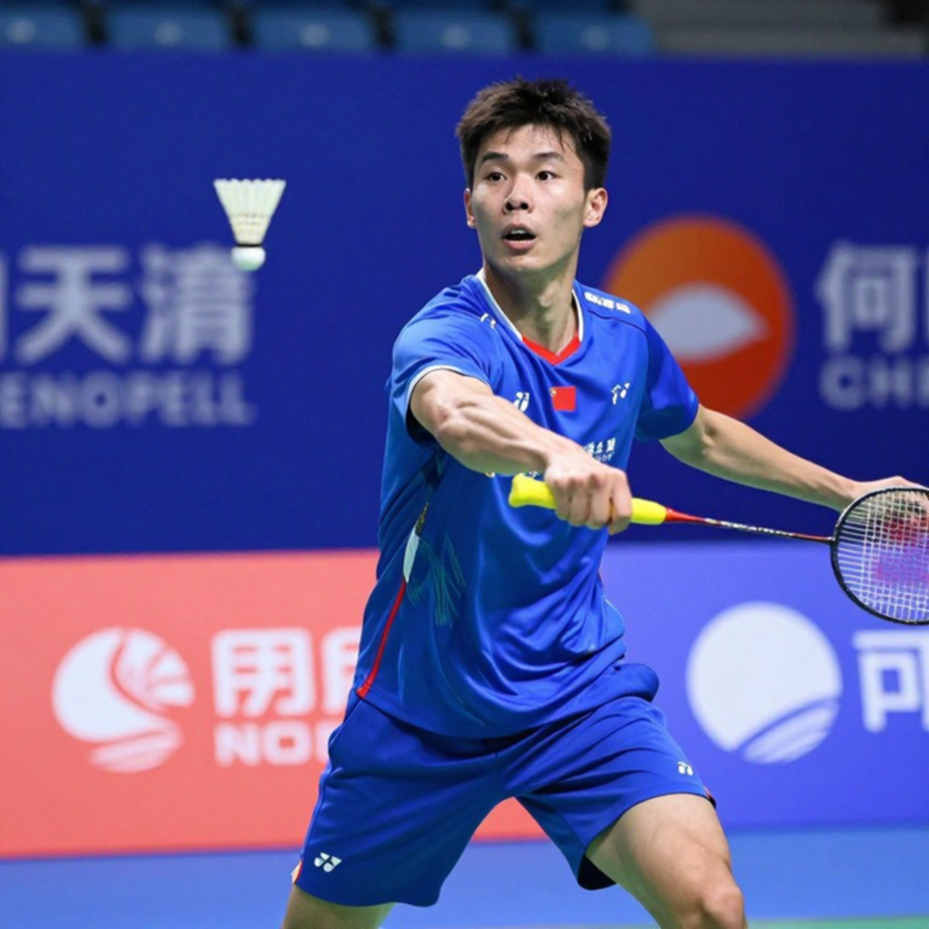
No rally descriptions. No smash speeds, no rally lengths, no unforced-error rates. No coach's name, no fitness notes, no current ranking for the winner. Just two games and a long silence behind them.
In eleven years of sitting courtside and writing about what I can see, I have learned one thing: a gap is not something to cover up. It is data. What is not told says something too, sometimes more than what is.
And this is the question I carried through this piece. Why does a BWF World Tour title, even at its lowest tier, get told in a single tweet?
That is where I start.
The context the tweet leaves out
Vietnam Open 2026 took place in Ho Chi Minh City, concluding on a Sunday in September. It belongs to the BWF World Tour, but at the Super 100 tier. Within BWF's structure, the World Tour runs across five levels: Super 1000, Super 750, Super 500, Super 300 and Super 100. Super 100 sits at the base of the pyramid. Fewest ranking points, smallest prize money, weakest field of the events that carry the World Tour name.
The champion received USD 9,000. By comparison, a Super 1000 title can bring tens of thousands, before sponsorship and media value. Nine thousand dollars covers an international trip. Not much more.
But the story here is not the tournament. It sits in another line, quieter, buried in the background any news item must mention: Aidil Sholeh became the first Malaysian men's singles player to win a BWF World Tour event in two years and three months. Twenty-seven months.
The last man to do it was Lee Zii Jia, at the Australian Open 2026, a Super 500.
I read those two facts side by side and saw a gap that is not small. Lee Zii Jia won at Super 500. Aidil Sholeh won at Super 100. The distance between those tiers is not just about points. It is the distance between an event the world's best schedule to farm points and an event they skip.
And through those 27 months, people kept talking about Malaysia. Articles kept asking when Malaysian men's singles would return. Comments kept comparing this generation with Lee Chong Wei's. The answer came from Ho Chi Minh City, in a hall I have never seen on a major-tournament map, on a September Sunday, with a USD 9,000 cheque.
The notable thing: Lee Zii Jia was there too. He reached the second round and lost to Zhe Ying Wu of Chinese Taipei. Same tournament, same week, same country. The man seen as the pillar stopped in round two; the man nobody mentioned went all the way.
Read only the result and you would call it good news. I am not sure.
The only thing the scoreline can tell us
I have to be honest about my limits. I do not have the final on tape. No match statistics, no service-error rate, no smash-winner count, no average rally length. I do not know how tall Aidil Sholeh is, or what stylistic school his movement belongs to.
I also do not know his age. That is a surprising gap for someone who has just won a World Tour event for the first time.
What I have are two games: 21-16 and 21-14.
With that, I can say only one thing, and I say it with low confidence. A straight-games win over an opponent ranked above him suggests Aidil held a degree of control. He did not endure a three-game physical war. He did not let the match stretch to the last of his endurance. He ended it on time.
The second game had a wider margin than the first. 21-16, then 21-14. In my experience of watching matches, that pattern often belongs to players who solve the problem inside the match itself. A probing first game, a second game in which the opponent has been broken down. But again: scoreline inference, not tape description. Low confidence.
What is safer is the reverse observation.
Jason Teh was the tournament's top seed. Top seed means the highest-ranked entrant. But Jason Teh's world ranking is No. 33.
Read that again. The top seed of a BWF World Tour event is ranked 33rd in the world.
At a Super 1000, the top seed is usually one of the best players alive. At a Super 100 held in September, when the leading players have finished their main season or are focused on bigger events, the top seed can be anyone from the sport's second and third tiers.
That is not Aidil Sholeh's fault. It is a feature of the tier.
But it changes how we read the achievement.
A Super 100 title won against a No. 33 top seed is a real title. The trophy is a trophy. The win is a win. But it establishes that Aidil has touched a ceiling, not that he has shifted a level.
I think of the line I carry whenever I read about a player winning for the first time: I don't ask the price, I ask about the old wound. For a first-time champion, the old wound is two finals reached and two finals lost. That is where I want to look.
Two runner-up finishes, and one that was not
Before winning Vietnam Open 2026, Aidil Sholeh Ali Sadikin had reached two international finals. The first at Indonesia Masters II in 2026. The second at Al Ain Masters in 2026. He lost both.
This is the most important fact in the whole story, and it barely appears in the tweet of 13 September.
A player who reaches one final might be lucky. A favourable draw, an opponent at the right level, form peaking at the right time. A player who reaches three finals in three years is different. Three finals means clearing five or six rounds three times. Sustaining fitness and nerve across three tournament weeks. Proving three times that the result is not noise but true capacity.
What Aidil lacked before September 2026 was not the ability to go deep. It was the ability to finish.
And this is where I have to be careful with my own scepticism.
I have a bad habit in this trade: whenever someone wins, I immediately look for reasons to doubt. Small tournament. Absent opponents. Easy draw. Temporary form. It is a good reflex against sports propaganda, but it can become a worn-out cynicism.
With Aidil Sholeh, I set that reflex aside at one point. Three consecutive finals across three years is a stable pattern. It does not prove he will win a Super 500. It proves he is not a one-off.
Two runner-up finishes, then a title. That is the curve of someone learning how to win, not someone who won by accident.
Three finals, one title, at an age I have not been told. If I had to guess from the arc, he is somewhere between twenty and twenty-five. But that is inference from a career curve, not a fact. I leave it there and move on.
The drought is the real headline
In every report on Vietnam Open 2026, the headline revolved around Aidil Sholeh. Understandable. A first-time champion is news. But the real headline of that week, as I read it, was a different sentence.
Malaysia had no men's singles champion on the BWF World Tour for twenty-seven months.
Let me place that fact against a wider background. Malaysia was once a men's singles power. In Lee Chong Wei's era, the country had a world No. 1 for years, winning Super Series titles in bulk and reaching three Olympic finals. One of the great men's singles careers in the sport's history.
After Lee Chong Wei retired, Malaysia entered the phase every badminton nation must pass through: finding a successor. Lee Zii Jia emerged and quickly became the pillar, winning major titles and going deep at the biggest events. For a while, the story of a generational handover was told fairly smoothly.
But a badminton nation built on one man has a structural weakness no amount of individual talent can offset. When he declines, the whole nation declines with him.
Twenty-seven months without a men's singles title is a signal. Not merely that one player has faded. That the layer behind him is not thick enough to absorb the gap when the leader can no longer hold the position.
And here is the point I want to stress, because it is easily misread.
Aidil Sholeh's title breaks the drought. It does not prove the drought is solved. A Super 100 with a No. 33 top seed is an indicator of field quality, not of the strength of the nation that won it. The distance between breaking a silence and rebuilding a power is very large.
Put another way: Malaysians have reason to celebrate, but not to relax.
The man outside the system
One detail in the reporting matters more to me than the title itself: Aidil Sholeh Ali Sadikin competes as an independent player. He is not inside the national-team structure managed by the Badminton Association of Malaysia.
Read that again. The man who broke a twenty-seven-month drought did it from outside the system.
I have sat courtside often enough to know the difference between a player inside a system and one outside it is not playing ability. It is everything around playing ability. A player inside the system has a paid coach, a training hall, a doctor, a strength specialist, an opponent analyst, someone handling visas and hotels. An independent player must arrange or pay for those things himself.
That difference does not decide who wins on court. It decides who can sustain a career long enough to learn how to win.
And here is something worth thinking about. Across Asian badminton, the centralised national-team model is the default. Countries with strong traditions bring young players into training centres, control their schedules, allocate resources by long-term strategy. The model has clear advantages: it creates stability and lets a badminton nation build an organised pipeline.
But centralisation also has a downside. It concentrates resources on the players judged most promising at a given moment, and those outside that group must find another road. Sometimes that other road turns out to be the right one.
Aidil Sholeh is a small piece of evidence, not enough to conclude anything, but enough to raise the question. Can a badminton nation misjudge its own players? Can a player placed outside the priority group improve to the point of winning a World Tour title without the centralised structure?
I do not have a full answer. But I think of the image of a man paying for his own trip to Ho Chi Minh City, hiring his own tactical advice, booking his own hotel, and then standing on the highest step while a system waits for him to fail.
That is a beautiful image. It is also a mirror.
Roslin Hashim, 2026, and a tournament's memory
There is one small fact I want to hold onto until the end. Aidil Sholeh became only the second Malaysian men's singles player in history to win Vietnam Open. The first was Roslin Hashim, in 2026.
The gap between those two wins is nineteen years.
I like this detail, not because it makes the title grander, but because it says something about how tournaments remember. Vietnam Open has existed for nearly two decades since a Malaysian last stood on top. Through that time the event kept happening, kept crowning champions, kept holding podiums. But its memory of Malaysian badminton stopped at one name from 2026.
Now there is a second name.
I do not want to inflate this. It does not turn Aidil Sholeh into a legend. But it reminds me that the history of small tournaments is usually buried under the history of big ones, and the milestones inside them still carry their own weight. A player may never win a Super 1000 and still be part of a specific tournament's memory, in a specific city, in a specific year.
That is a different kind of existence, humbler than a place on the big-event roll of honour. But it is real.
Nine thousand dollars and the limits of a career
I want to talk about money, because few people write about it honestly.
USD 9,000 is the champion's prize at a Super 100. That amount arrives after tax, after travel, after accommodation, and after every cost an independent player must cover himself. For many players, nine thousand dollars is not profit. It is partial reimbursement for what was already spent.
This is the economic structure of the sport at the bottom. Super 100 events exist so players can collect ranking points, not so players can make a living. And that structure creates a loop: players need points to enter bigger events, need money to enter smaller ones, and the money from smaller ones often does not cover the cost of entering them.
For a player inside a national-team structure, those costs are shared. For an independent player, they sit on his shoulders, or on the shoulders of those who sponsor him.
I thought about that while reading Aidil Sholeh's name. A Super 100 title gives him ranking points and a small sum. What it does not give him is certainty. It does not pay for the next year of competition. It does not guarantee a place at Super 300 or Super 500 events. It only opens a door, and the door can close again if he does not walk through quickly.
This is what short news lines tend to skip. A player winning means he did something. It does not mean he is safe.
Lee Zii Jia and the gap beside the leader
In that same week, at that same tournament, Lee Zii Jia stopped in the second round. The man who beat him was Zhe Ying Wu of Chinese Taipei, an unseeded player.
I have no information about Lee Zii Jia's condition at the time. I do not know whether he carried a fitness problem, an injury, or simply had not found his form. A second-round loss at a Super 100 can have many causes, and reasoning too much from a single result is what I want to avoid.
But the shape of the situation is clear. The man seen as the leader of Malaysian men's singles left early. The man seen as having nothing special stayed to the end. And across recent years, every time Lee Zii Jia has underperformed, the question returns: who is behind him?
That question has a history. It has been asked in Malaysia since Lee Chong Wei retired. Then the answer was Lee Zii Jia. Now, with Lee Zii Jia off his peak, the answer remains: no one clearly.
And this is where Aidil Sholeh's title becomes more interesting than it looks.
If he were a player inside the system, the title could be read as a sign that the successor layer is forming. But he is an independent player. That means the sign has come from outside the system that was supposed to produce the sign.
That is not always the case. But when someone succeeds outside a structure designed to produce success, the natural question is: who did that structure overlook, and how?
I do not have data to answer that. But I know it is the right question.
And I know one more thing from my experience of watching matches: independent players in Asia often have no voice in decisions about whether they are called up to national teams, given quota places at team events like the Thomas Cup, or supported through Olympic qualification. Those decisions usually follow criteria written by the system.
A Super 100 title does not necessarily change those criteria. But it creates a small, quiet pressure on how people read them.
The silence after the shuttle lands
Back to the final.
I think a lot about the moment right after the last point ends. In tennis and badminton there is a very particular interval after the deciding shot lands: about two seconds before the crowd reacts, before the umpire calls it, before the player understands what he has just done.
In those two seconds, a player stands alone.
I do not have footage of that moment in Ho Chi Minh City. I do not know what Aidil Sholeh did. But I know what usually happens in that interval to a man who has lost two finals before. There is a slowing down. A silence the body does not know how to answer, because it has been trained to respond to defeat and not yet trained to respond to the opposite.
From the falls to the finish line where nobody calls your name, I see a long road called loneliness. I carry that line. And it fits the players at the bottom of the World Tour, competing in halls the cameras do not point at, whose biggest career title may be told in a single tweet.
That is what I want to keep from this story. A small title, at a small tournament, by a player I know nothing about beyond his name and two game scores. And behind it, a badminton nation trying to understand itself.
The contrarian angle: what is worrying inside good news
Here I have to say plainly what I believe is true, even if it is not easy to hear.
A country that has one Super 100 champion and calls it "history" is a country that has lowered its own yardstick.
I am not saying Aidil Sholeh does not deserve it. He does. He won five or six matches in a week, beat the top seed, and did what two other Malaysian players at the same event could not. For him personally, that is a real step.
But for Malaysian badminton, the framing has a problem.
When the last man before him to win a World Tour title, in 2026, did it at Super 500, and the next man does it at Super 100, what is called "breaking the drought" is in fact a downward shift of the achievement ceiling. Malaysian men's singles' peak has dropped a level. Two years and three months ago they won at Super 500. Now they win at Super 100.
That is a fact. It is not erased by the joy of a Sunday evening in Ho Chi Minh City.
And here is what I think happens next, based on how sports publics usually react. Aidil Sholeh will be called "one of Malaysia's top players", as some reports already wrote. He will enter coming tournaments with expectations higher than his current record can support. He will face opponents from the world's top ten or twenty who do not appear at Super 100 events. And if he loses in the first or second round, comments will ask why the "Vietnam Open champion" played that way.
The expectation created by a twenty-seven-month drought is larger than the expectation created by a Super 100 title. That asymmetry is real, and it is a burden the player carries, not the reporter.
I have seen this many times. A player wins a small event, domestic media pushes the story, and three months later, when he loses repeatedly at big events, the same outlets ask what went wrong. Nothing went wrong. The small event ended and the big events began.
With Lee Zii Jia, the situation is more complicated. He has carried a nation's expectations for years. With his form slipping, the system has no clear replacement, and now the potential replacement comes from outside the system. That is a situation nobody in Malaysia wanted.
But it could be a good one.
If Malaysia's badminton leadership reads this title as a sign that the independent path can produce players, and adjusts selection policy to be more inclusive of those outside the centralised structure, then the twenty-seven-month drought could become a beginning rather than an exception.
If they read it as simple good news and carry on, the next independent player will again have to find his own way to a distant city, pay for his own hotel, and break another drought himself.
I do not know what they will do. But I know the tweet of 13 September 2026 does not contain the answer.
What I take out of Ho Chi Minh City
I have never been to Ho Chi Minh City for a badminton match. But I grew up in Vietnam, and I know that city in September: afternoon rain, crowded streets, the endless sound of motorbikes. A badminton hall there, on a Sunday, with a few hundred spectators and a small trophy, is a modest setting for an event another country calls history.
I think about the distance between where something happens and where it gets told. The title happened in Ho Chi Minh City. The story was told in Kuala Lumpur. The line was posted by an aggregator account, then picked up by another outlet. At each layer, the event loses a little detail and gains a little meaning.
By the end of the journey, what remains is a name, two games, and the word "history".
I am not sure that word is correct.
The crowd can be fake, the cheers can be fake, but the emptiness is real, and I record it with my ear. Here, the emptiness is all I have: no footage, no statistics, no coach's name, no current ranking for the winner. Just a Malaysian player on the highest step at a Super 100, and a badminton nation behind him asking what it means.
What to watch over the next six months
The next three months will say more than the tweet of 13 September.
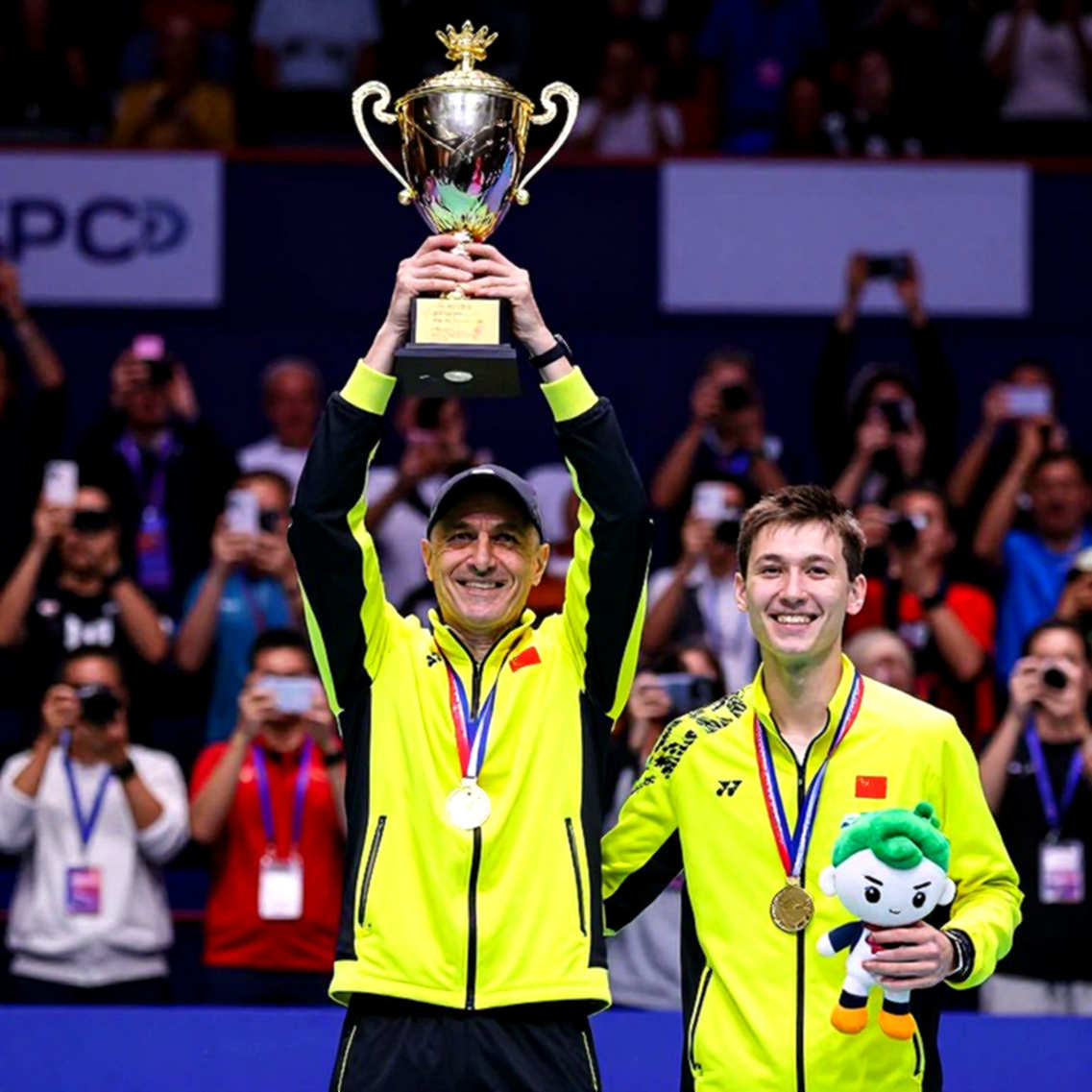
If Aidil Sholeh reaches quarter-finals or better at a Super 300 or Super 500 in the first half of 2027, the Ho Chi Minh City title will be re-read in another sense. It will become the starting point of a trajectory rather than the peak of a career. Then the phrase "one of Malaysia's top players" will begin to have a basis.
If he loses in the first or second round in his next three events, the story turns. There will be comments that a Super 100 means nothing, that the top seed was ranked 33rd, that this was just a lucky moment. I do not think that would be a fair reading, but it is the reading that will appear.
And if Lee Zii Jia keeps exiting early, the pressure on Malaysia's badminton structure will only grow. A badminton nation that had a world No. 1 for years now faces a question it has not had to answer in two decades: if the leader is no longer leading, then who?
The temporary answer, in September 2026, is a little-mentioned independent player who just won two games 21-16 and 21-14 in Ho Chi Minh City.
That is a small answer. But it is a real one.
Conclusion
One thing I have learned after years standing courtside watching young people fight their own limits: the smallest victories are usually the hardest, because they carry no light. No full stands, no live broadcast, no prize money to live on. Just one week of competition, one trophy, and twenty-seven months of silence wiped away.
Aidil Sholeh Ali Sadikin did not become a world champion in Ho Chi Minh City. He became the first man in twenty-seven months to do what his country's badminton had not done. For a badminton nation, that is a moment. For a person, it is a career rewritten in a way a tweet cannot hold.
And the question I leave is not for Aidil but for the system that watched him take his own road: if the man who broke your drought is a man you did not choose, what is your choosing actually measuring?